Meheen filling low, or filling inconsistently
Two different faults get described the same way, and separating them is the first move. If every head is low by roughly the same amount, look at pressure, timing and product temperature. If one or two heads are low and the rest are right, look at those heads. Everything below follows from that split.
Work through it in this order
Cheap and common first, expensive last. The order is the information.
-
Every head, or some heads?
Fill ten bottles and mark which head filled each one. Four minutes, and it decides everything that follows. Uniformly low is a machine-wide condition. Head-specific is a component on those heads.
-
Your air supply, before anything else
A machine that fills correctly in the morning and badly by mid-afternoon usually isn’t the machine. A Meheen wants roughly 15 cfm at 90 psi (25 m³/h at 6.2 bar), dry and clean, through a dryer and a coalescing filter.
- Does the compressor keep up when everything else is running? Chiller, CIP, the lot.
- When was the coalescing filter last changed? Not who changed it. When.
- Any moisture visible in the lines?
- Does the reading at the machine hold under load, or only at rest?
Air that’s degraded quietly over months looks exactly like a worn fill section, and it’s the cheapest thing here to put right. Check it before you buy anything.
-
The bottles
Same bottles you were running last month? Glass from a different works, or a different batch from the same one, can vary in internal volume and neck geometry while still being nominally the same format. If the fill level looks wrong but the volume is right, that’s usually why. Weigh a few before you touch the machine.
-
Product temperature and CO2
Warmer product and higher carbonation both change fill behaviour. If the fill went wrong the same week something changed in the cellar, that’s not a coincidence.
-
Fill valve seals, head by head
If it’s head-specific, this is where it lives. Seals that have hardened, flattened or cracked. Scoring where the bottle mouth seats. Anything weeping at rest. A head that doesn’t seal can’t hold counter-pressure, and a short fill is what you get.
The good news: nothing in a Meheen fill section turns or grinds. What you’re looking at is a sealing or wear component. A replaceable part, not a rebuild.
-
Fill timing and sequence
If the air’s good, the seals are good and the bottles are consistent, what’s left is timing. On machines that have changed hands this is often something a previous owner adjusted and nobody wrote down. Mention it when you get in touch, because it changes where we start.
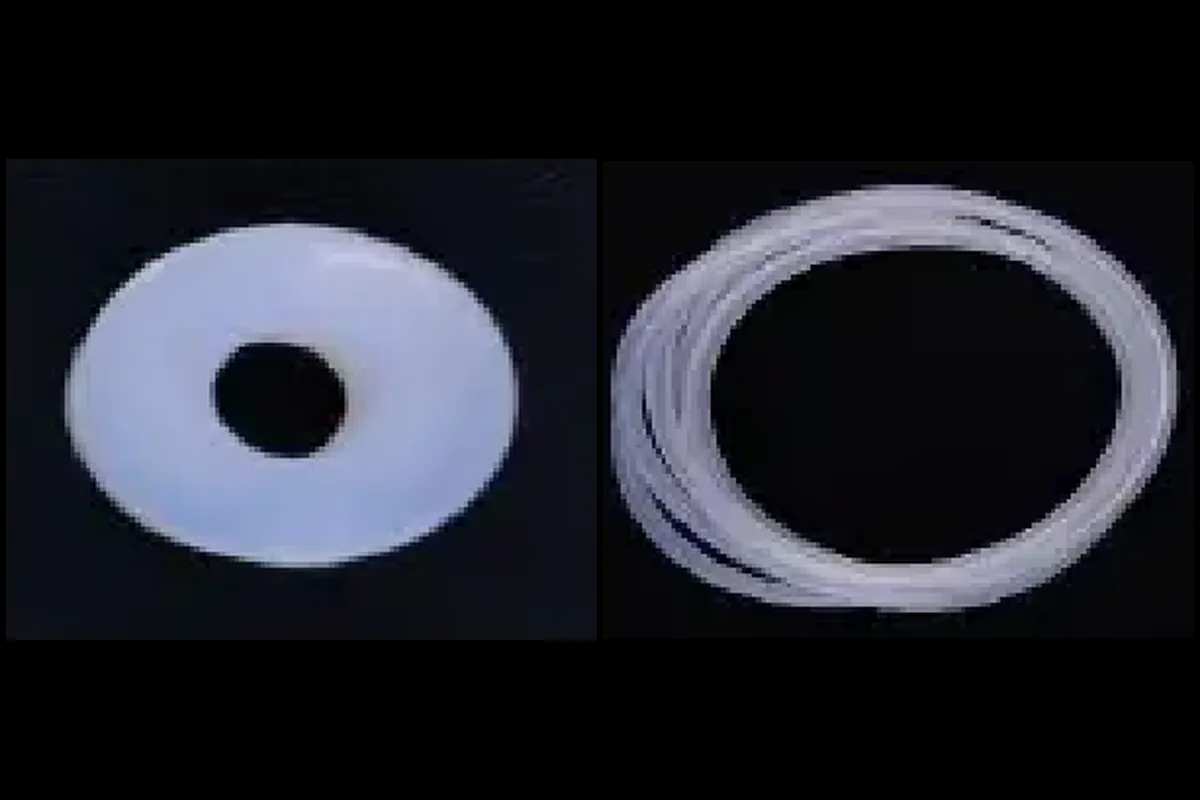
Tell us which heads, what you’ve already checked, and send a photo of the seal or the head. No part number needed, and the serial only if it’s to hand. You’ll get an identification, a price and a real lead time within 24 hours.
Then it’s worth sending it to us
Which heads, what you’ve eliminated, and a photo. Answer within 24 hours.
If it’s across all heads and the air really is good, an engineer will find it faster than a parts order will.
The questions this one raises
Is this a fill valve problem?
Head-specific, usually yes. Uniform across all heads, usually not — check air and pressure first.
Can I fix it myself?
Very often. Air supply, filtration and seal replacement are all within reach of a competent maintenance person, and we’d rather send you the part than a visit.
How fast can you get me seals?
DAP across Europe, 24 hours to six weeks depending on the item and where you are. Wear items are at the fast end.
Do you need a part number or a serial?
Neither. A photo and a description.
What does a diagnosis cost?
Nothing.
Tell us what your machine’s doing
A photo, a line about what the machine’s doing, and the serial number if you can find it. Free diagnosis. Answer within 24 hours.