Meheen losing pressure, or not holding counter-pressure
Start with the question that costs nothing. Is the pressure not arriving, or arriving and leaking away? Watch a single cycle. If it never builds to where it should, that’s the supply side. If it builds and then falls, that’s sealing. Two faults, two ends of the machine, one test.
Work through it in this order
Cheap and common first, expensive last. The order is the information.
-
Watch one cycle and pick a side
Never builds: supply side — compressor, filtration, regulators, CO2. Builds and then falls: sealing — bottle seal, valve seals, circuit seals, or a leak in the lines.
-
Not arriving: compressed air
A Meheen wants roughly 15 cfm at 90 psi (25 m³/h at 6.2 bar), dry and clean, through a dryer and a coalescing filter. The classic pattern is a machine that’s fine first thing and degrades through the day — a compressor without the headroom it had when it was installed, or a filter that’s now a restriction.
-
Not arriving: filtration and drying
A clogged coalescing filter looks exactly like a pressure fault. Moisture in the lines damages valve components over time and creates intermittent faults that are miserable to chase.
-
Not arriving: regulators and CO2 supply
Read at the machine under load, not at the compressor at rest. Ask whether anyone’s adjusted a regulator recently and whether it’s written down anywhere. Then check there’s enough CO2 pressure and flow at the machine, with no restriction in the line.
-
Leaking away: the lines first
Before you take anything apart, do the overnight test. Pressurise the machine, leave it, come back in the morning and see where the pressure went. On these machines a leak in the lines or a fitting is the single most likely answer, and it’s the cheapest to put right.
-
Leaking away: the bottle seal at the head
If the bottle isn’t sealing, counter-pressure can’t be held. Head-specific, so mark which heads before anything else.
-
Leaking away: valve seals, pneumatics and the CO2 circuit
Hardened, flattened, cracked. The standard failure and a wear item. Then cylinder seals, fittings and lines, then the CO2 circuit seals and connections.
-
What the design tells you
Nothing in the fill section turns or grinds, which is useful here. You’re not looking for a failed mechanical assembly. You’re looking for a seal, a filter, a fitting or a supply problem — all cheaper, easier to find and more likely to be within your own team’s reach than whatever you were fearing.
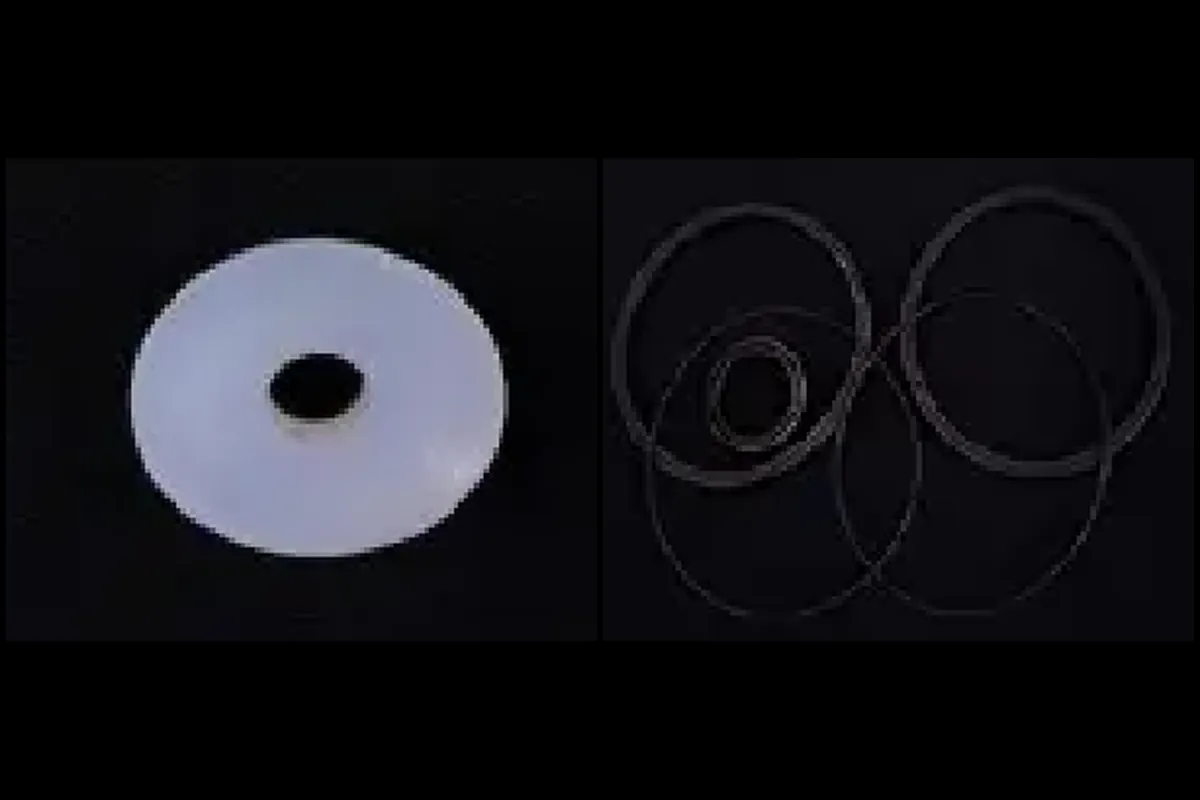
Tell us which heads, what you’ve eliminated, and send a photo. You’ll get a price and a real lead time within 24 hours.
If one seal has gone, the others are the same age. We’ll tell you honestly whether a set makes more sense than a single item.
Then it’s worth sending it to us
Which heads, what you’ve eliminated, and a photo. Answer within 24 hours.
If it’s machine-wide and the supply side really is good, an engineer will find it faster than a parts order will.
The questions this one raises
How much air does a Meheen actually need?
Roughly 15 cfm at 90 psi, 25 m³/h at 6.2 bar, dry and clean, with a dryer and a coalescing filter.
Fine in the morning, bad by afternoon.
Almost always air supply headroom or filtration.
Where do these usually leak?
The lines and the fittings, more often than the valves. Do the overnight test before you take anything apart.
Should I replace all the seals or just the failed ones?
If one’s gone, the others are the same age. Send a photo and we’ll tell you honestly whether a set makes more sense.
Can moisture in the lines cause this?
Yes, and it causes intermittent faults that are far harder to chase than a straightforward leak. Fix the drying first.
Tell us what your machine’s doing
A photo, a line about what the machine’s doing, and the serial number if you can find it. Free diagnosis. Answer within 24 hours.